
Why Thickeners Matter in Liquid Cleansers: Smooth, Stable, and Safe
author: R&D Bella/ Jun. 12, 2026
Introduction
Have you ever wondered what makes your shampoo, body wash, or hand soap so thick, creamy, and easy to use? The secret lies in high-quality lauryl non-ionic thickeners. These key ingredients not only provide optimal viscosity and creamy foam stability; they also give formulators the power to create consistent, skin-friendly liquid cleansers that boost overall consumer satisfaction.
What Are Thickeners?
Thickeners build the perfect viscosity, making shampoos and body washes easy to pour while ensuring a rich, stable lather. They also boost product stability, prevent phase separation, and keep the formula consistent under different storage conditions.
Why Lauryl Non-Ionic Thickeners Matter
Among liquid cleanser thickeners, high-quality lauryl non-ionic thickeners are particularly effective:
- CDEA (Cocamide DEA) – A traditional thickener with excellent foam and viscosity.
- CMEA (Cocamide MEA) – A mild, DEA-free alternative that is stable and skin-friendly.
- CMMEA (Cocamide MMEA) – A next-generation thickener with superior stability and excellent low-temperature resistance.
These thickeners are highly compatible with a wide range of surfactants, including SLES, AOS, K12, and CAPB, ensuring that liquid cleansers achieve a thick, stable, richly lathering, and smooth texture.
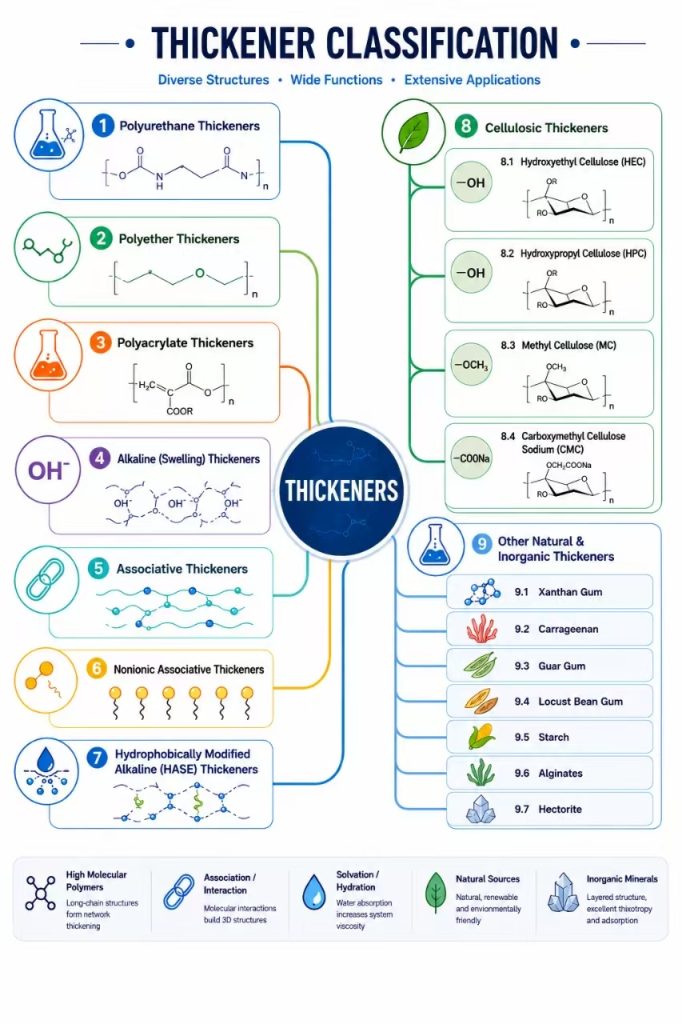
How They Work
Lauryl non-ionic thickeners work primarily through a process called “micellar transition.” When you mix them with anionic surfactants, they force small, round micelles to stretch out into rod-like (or worm-like) shapes. These rods then link up into a network that builds the product’s viscosity.
STEP 1: Micelle Shape Transition
The lauryl non-ionic thickener molecules insert into the micelles of anionic surfactants (such as SLES or AOS). This functions in two ways:
- Shielding electrostatic repulsion: The insertion lowers the charge density on the micelle surface and reduces the mutual repulsion. This allows the surfactant molecules to arrange themselves more tightly.
- Promoting molecular association: Due to their specific molecular structure, these thickeners increase the micelle aggregation number, causing the small, spherical micelles to gradually transform into larger rod-like micelles that restrict fluid flow.
STEP 2: Forming a 3D Network
As the concentration of rod-like micelles increases, they begin to interact, entangle, and align with one another, forming a dynamic 3D network structure. This network binds a large amount of water molecules, increasing the internal friction during fluid flow to achieve the thickening effect.
STEP 3: Synergy with Electrolytes
When formulated with inorganic salts (such as NaCl or NH4Cl), the thickener works synergistically with the electrolytes. The salts compress the electrical double layer of the micelles and shield the electrostatic repulsion more intensely, promoting rapid micellar growth to further elevate viscosity.
Applications
High-quality lauryl non-ionic thickeners are ideal for:
- Shampoos and facial cleansers.
- Body washes and hand sanitizer.
- Dishwashing liquids, laundry detergent, and household cleaners.
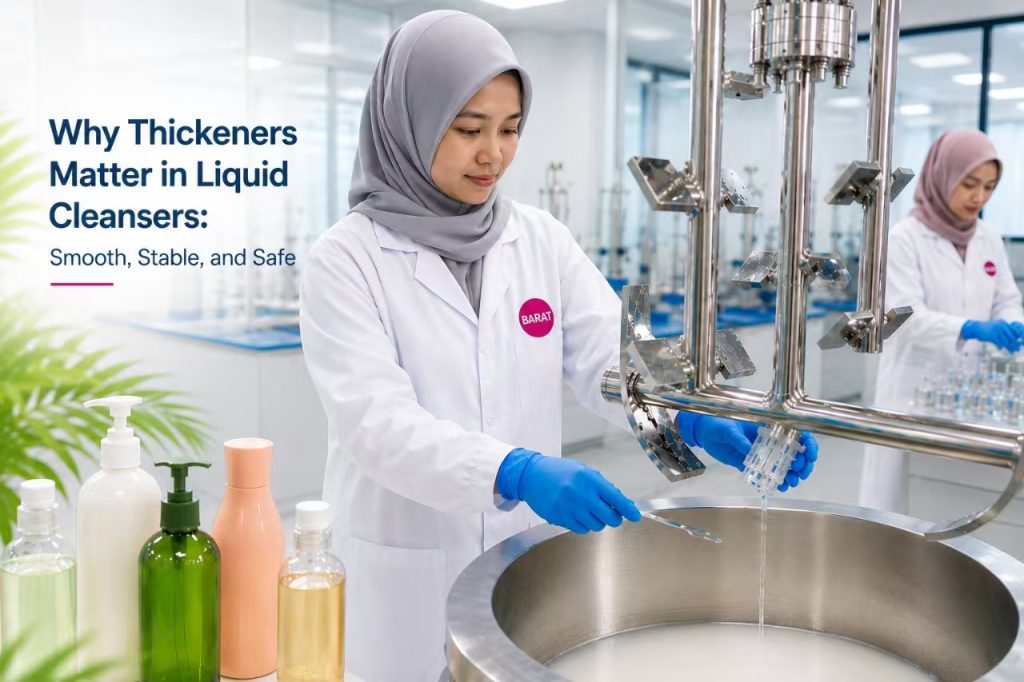
Why Choose BARAT
BARAT provides high-quality lauryl non-ionic thickeners designed to deliver:
- Optimized C12–C14 structures for superior foam and viscosity
- DEA-free options to ensure safety.
- Excellent stability even in low-temperature formulations.
- Fully compatible with various surfactants.
All BARAT products are HALAL-certified, ISO-compliant, and sustainably sourced from premium palm oils.
Conclusion
Next time you use a smooth, richly lathering, and stable shampoo or body wash, remember: the right thickener changes everything. BARAT’s CDEA, CMEA, and CMMEA ensure that every formulation meets your demands for texture, stability, and mildness.